

Why Do Chickens Cluck? Fun Facts About Farm Birds
Why Do Chickens Cluck? Fun Facts About Farm Birds
Chickens might seem like simple farm animals, but they're actually fascinating creatures with complex social lives, surprising intelligence, and a rich vocabulary of sounds. If you've ever wondered why chickens cluck, or what life is really like on the farm, read on — you might be surprised!
Why Do Chickens Cluck?
Chickens are remarkably communicative animals. Scientists have identified over 30 distinct vocalisations that chickens use to communicate different things:
- The "buk-buk-buk" cluck: A general contact call that says "I'm here, everything's fine."
- The egg song: A loud, proud cackle a hen makes after laying an egg.
- The alarm call: A sharp, urgent sound warning the flock of danger.
- The food call: A rapid clucking a rooster makes to alert hens to food he's found.
- Purring: Yes, chickens purr! It's a soft sound they make when content.
- Peeping: Chicks begin communicating with their mother before they even hatch, peeping from inside the egg.
Chickens Are Smarter Than You Think
Research has shown that chickens are surprisingly intelligent:
- They can count and do basic arithmetic — chicks as young as a few days old can track numbers.
- They demonstrate self-control, waiting for a bigger food reward rather than eating immediately.
- They show empathy — mother hens show signs of distress when their chicks are uncomfortable.
- They have a pecking order (yes, that's where the phrase comes from!) — a social hierarchy where each bird knows its rank.
Fascinating Chicken Facts for Kids
- There are more chickens on Earth than any other bird — around 33 billion!
- A hen can lay up to 300 eggs per year.
- Chickens can see in full colour and even into the ultraviolet spectrum.
- They take dust baths to keep their feathers clean and free of parasites.
- Chickens dream — they experience REM sleep just like humans and dogs.
- The red fleshy comb on top of a chicken's head helps regulate their body temperature.
Different Types of Farm Birds
Chickens aren't the only fascinating birds you'll find on a farm:
- Ducks: Excellent swimmers with waterproof feathers, ducks are social and curious birds.
- Geese: Highly protective of their flock, geese are often used as natural "guard animals" on farms.
- Turkeys: Surprisingly social birds that can recognise individual human faces.
- Guinea fowl: Excellent at pest control and known for their loud alarm calls.
Farm Bird Activities for Kids
- Sound matching: Listen to recordings of different chicken calls and try to guess what each one means.
- Egg investigation: Examine an egg together — discuss the shell, the yolk, and how a chick develops inside.
- Farm visit: If possible, visit a local farm or petting zoo to meet chickens up close.
- Pecking order game: Discuss what a pecking order is and whether kids notice similar social structures in their own lives.
Bring the Farm to Life Through Play
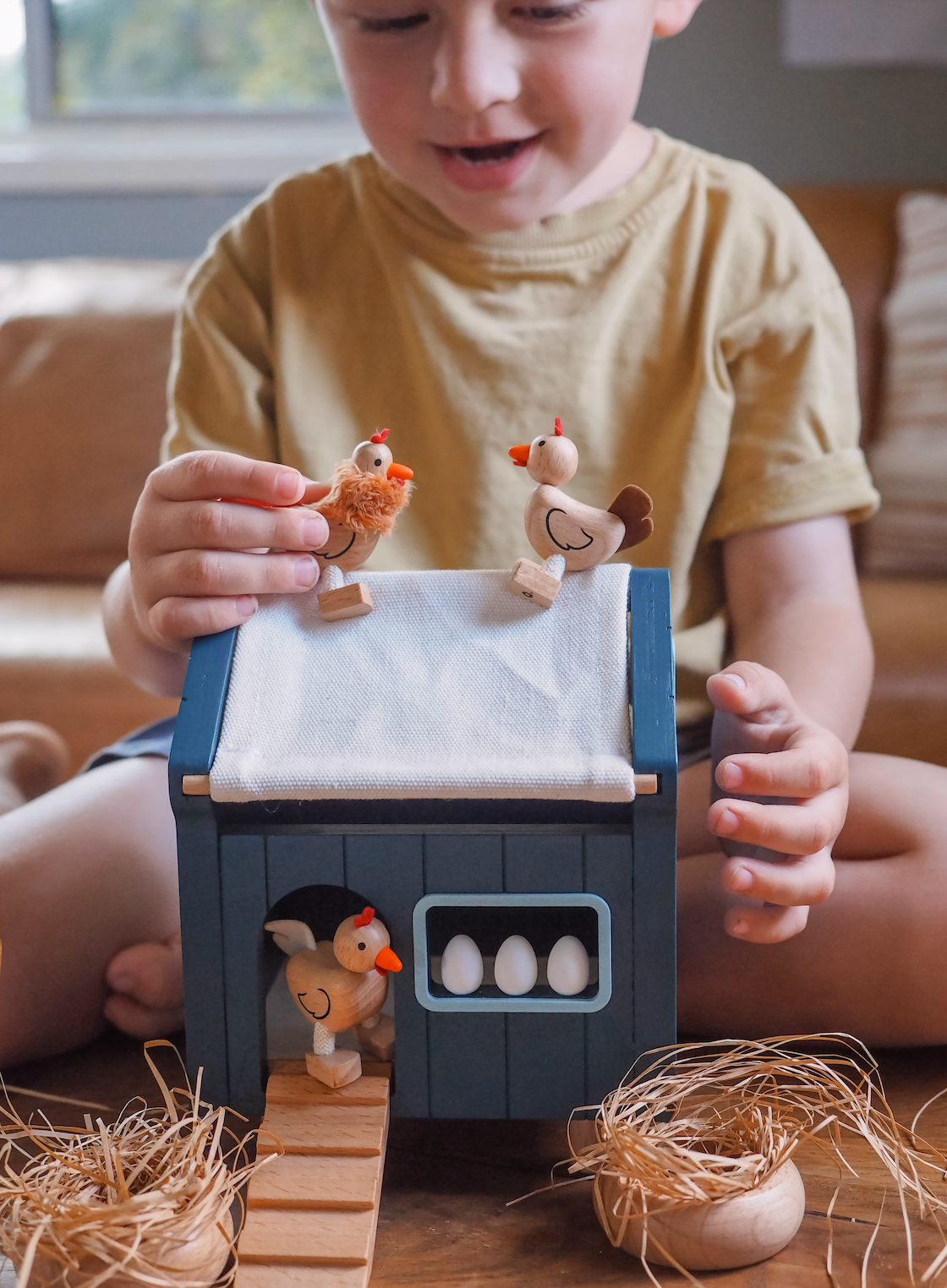
Our Barnfields collection features beautifully crafted wooden farm animal figurines, perfect for imaginative play and learning.
Shop the Barnfields Collection →
Further Reading & Resources
Explore these educational sites to learn more about chickens, farm birds, and animal welfare:
- RSPCA Australia — Chickens — Australia's leading animal welfare organisation explains chicken behaviour, needs, and welfare standards in an accessible, family-friendly format.
- Backyard Chicken Coops — Chicken Behaviour Guide — a practical, engaging guide to understanding chicken communication and social behaviour, great for kids curious about keeping chickens.
- National Geographic — Chicken — facts, photos, and videos about domestic chickens and their wild ancestors, ideal for classroom research.
- Science Daily — Chicken Intelligence Research — a summary of peer-reviewed research on chicken cognition and emotional complexity, great for older kids and parents who want to go deeper.
- ABC Education — Farm Animals — Australian curriculum-aligned educational content about farm animals, including chickens, from the ABC's trusted education platform.
Discover more animal facts on our Ramblings blog — from safari giants to ocean explorers.

Send us a note