

How We Know About Dinosaurs: Fossils Explained
How We Know About Dinosaurs: Fossils Explained
Dinosaurs went extinct many many years ago — long before any human walked the Earth. So how do we know what they looked like, what they ate, how they moved, and even what sounds they might have made? The answer lies in one of science's most exciting fields: palaeontology, and the remarkable clues left behind in rock called fossils.
What Is a Fossil?
A fossil is the preserved remains or traces of an ancient living thing — an animal, plant, or even a microorganism — that has been mineralised over millions of years. Fossils form through a slow, remarkable process:
- Death and burial: When a dinosaur died, it needed to be buried quickly — usually by sediment like mud, sand, or volcanic ash — before scavengers or decay could destroy it.
- Mineralisation: Over thousands of years, water carrying dissolved minerals seeped into the buried bones. Gradually, the original bone material was replaced by minerals, turning it to stone.
- Compression: Over millions of years, layers of sediment built up above, compressing the fossil deeper into rock.
- Exposure: Eventually, erosion — wind, water, and time — wore away the rock above, exposing the fossil at the surface where a palaeontologist might find it.
This process is incredibly rare. The vast majority of animals that ever lived left no fossil record at all. Every fossil we find is an extraordinary piece of luck.
What Parts of Dinosaurs Fossilise?
- Bones and teeth — the most common dinosaur fossils
- Claws and horns
- Eggs and nests
- Footprints (called trace fossils) — preserved in ancient mud that hardened to rock
- Skin impressions — rare but incredibly exciting finds
- Coprolites — fossilised dinosaur dung, which tells us what they ate!
What Is a Palaeontologist?
A palaeontologist is a scientist who studies fossils to understand ancient life. Their work involves:
- Fieldwork: Searching for fossils in rock formations around the world — often in remote deserts, cliffs, and riverbeds.
- Excavation: Carefully removing fossils from rock using brushes, chisels, and sometimes dental tools.
- Analysis: Studying fossils in laboratories, comparing them to known species, and using technology like CT scanning to see inside fossils without damaging them.
- Reconstruction: Using fossil evidence to reconstruct what a dinosaur looked like, how it moved, and how it lived.
How Do We Know What Dinosaurs Looked Like?
- Bone structure tells us about muscle attachment points, giving clues about body shape and movement.
- Comparison with living relatives — birds are the living descendants of theropod dinosaurs, so studying birds helps us understand dinosaur behaviour and physiology.
- Skin impressions reveal texture and sometimes colour patterns.
- Feather fossils have shown us that many dinosaurs — including T-Rex relatives — had feathers.
- Chemical analysis of some exceptionally preserved fossils has even revealed traces of original pigments, giving us clues about colour.
Famous Fossil Discoveries
- Sue the T-Rex — the most complete T-Rex skeleton ever found, discovered in South Dakota in 1990.
- Archaeopteryx — a feathered dinosaur that helped prove the link between dinosaurs and birds.
- The Liaoning fossils — a treasure trove of feathered dinosaurs found in China, revolutionising our understanding of dinosaur appearance.
- Dinosaur eggs in Patagonia — nesting sites that revealed how some dinosaurs cared for their young.
Fossil Activities for Kids
- Make your own fossil: Press a shell or leaf into air-dry clay and let it harden. Discuss how real fossils form over millions of years.
- Fossil dig: Hide small plastic dinosaurs or shells in a tray of sand. Give kids brushes and let them excavate — just like real palaeontologists!
- Museum visit: Many natural history museums have real fossil displays. Look for the details — can you spot teeth marks, skin texture, or footprints?
- Trace fossil hunt: Look for modern "trace fossils" — footprints in mud, burrows in soil, or chewed leaves. Discuss how these might be preserved over time.
Bring Prehistoric Life Home
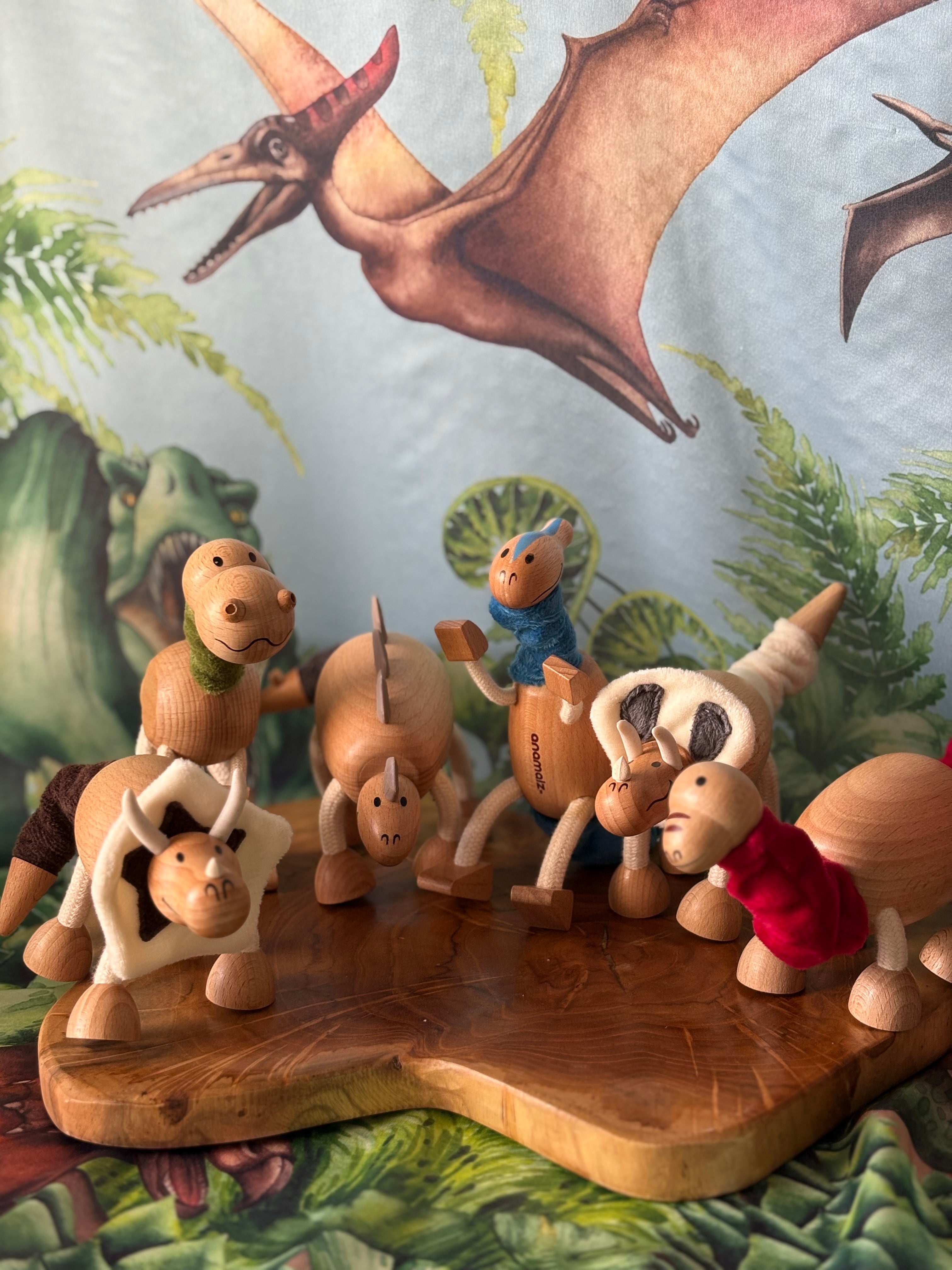
Our Hidden Valley collection features beautifully crafted wooden dinosaur figurines, made from sustainably sourced timber. They're perfect for imaginative prehistoric play — and for inspiring the next generation of palaeontologists.
Shop the Hidden Valley Collection →
Further Reading & Resources
These trusted museums, research institutions, and educational sites are fantastic for exploring fossils and palaeontology further:
- Natural History Museum — How Do Fossils Form? — the London Natural History Museum explains the fossilisation process in clear, accessible language, with beautiful illustrations — perfect for kids and parents alike.
- Australian Age of Dinosaurs — Australia's own world-class dinosaur museum in Winton, Queensland, where some of the largest dinosaurs ever found in the Southern Hemisphere were discovered. Offers educational programs and virtual resources.
- American Museum of Natural History — Paleontology Ology — the AMNH's dedicated kids' palaeontology hub, with interactive activities, fossil guides, and interviews with real palaeontologists.
- National Geographic — Prehistoric World — stunning photography, videos, and up-to-date articles on fossil discoveries and prehistoric life from one of the world's most trusted science publishers.
- Museums Victoria — Dinosaur Walk — Melbourne's own Museum Victoria hosts one of Australia's best dinosaur exhibitions, with fossil specimens, interactive displays, and educational resources for schools and families.
Explore more on our Ramblings blog — from T-Rex size comparisons to Stegosaurus diet facts and beyond.
Send us a note