

Did You Know Giraffes Only Sleep 30 Minutes a Day? 10 Amazing Facts for Kids
10 Fascinating Giraffe Facts for Kids
Giraffes are one of the most instantly recognisable animals on the planet — and for good reason! With their impossibly long necks and beautiful spotted coats, they're a favourite among children and adults alike. Here are 10 amazing giraffe facts that will wow the kids in your life.
1. Giraffes Are the Tallest Animals on Earth
An adult giraffe can grow up to 5.5 metres tall — that's taller than a double-decker bus! Their long necks alone can measure up to 1.8 metres. This incredible height helps them reach leaves at the very tops of trees that other animals simply can't get to.
2. Their Tongues Are Extraordinary
A giraffe's tongue is around 45–50 centimetres long and is a dark bluish-purple colour. Scientists believe this dark pigmentation helps protect their tongues from sunburn while they spend hours feeding in the hot African sun. They use their tongues to grab and strip leaves from thorny acacia branches.
3. Giraffes Only Sleep a Little
Giraffes are one of the animals that need the least sleep — just 30 minutes to 2 hours per day! They often sleep standing up to stay alert for predators, though they do occasionally lie down for short naps.
4. A Baby Giraffe Can Stand Within Hours of Being Born
Baby giraffes (called calves) are born after a 15-month pregnancy and drop nearly 2 metres to the ground at birth. Remarkably, they can stand and even run within just a few hours — a survival skill that's essential in the wild.
5. Giraffes Have the Same Number of Neck Bones as Humans
Despite their incredibly long necks, giraffes have exactly 7 cervical vertebrae — the same as humans! The difference is that each bone is much, much longer. This is a great reminder that animals can look very different on the outside but share surprising similarities on the inside.
6. No Two Giraffes Have the Same Pattern
Just like human fingerprints, every giraffe's coat pattern is unique. The patches vary in shape, size, and colour from giraffe to giraffe. Researchers use these patterns to identify individual animals in the wild.
7. Giraffes Are Social Animals
Giraffes live in loose groups called towers. These groups are flexible — giraffes come and go freely. Female giraffes (cows) tend to stay in groups with their young, while male giraffes (bulls) often roam more independently or form bachelor groups.
8. They Drink Water in a Vulnerable Position
Because of their long legs and necks, giraffes have to splay or bend their front legs awkwardly to reach water. This position makes them vulnerable to predators like lions and crocodiles, so they're very cautious when drinking and often do so in groups.
9. Giraffes Are Mostly Silent
For a long time, scientists thought giraffes were mute. We now know they communicate through low-frequency humming, especially at night. They also make snorts, grunts, and flute-like sounds — but much of their communication may happen at frequencies too low for humans to hear.
10. Giraffes Are Vulnerable in the Wild
Sadly, giraffe populations have declined by up to 40% over the last 30 years due to habitat loss, poaching, and human conflict. There are now fewer giraffes in Africa than elephants. Teaching kids about giraffes is one of the first steps toward inspiring the next generation of conservationists.
Bring the Magic of Giraffes Home
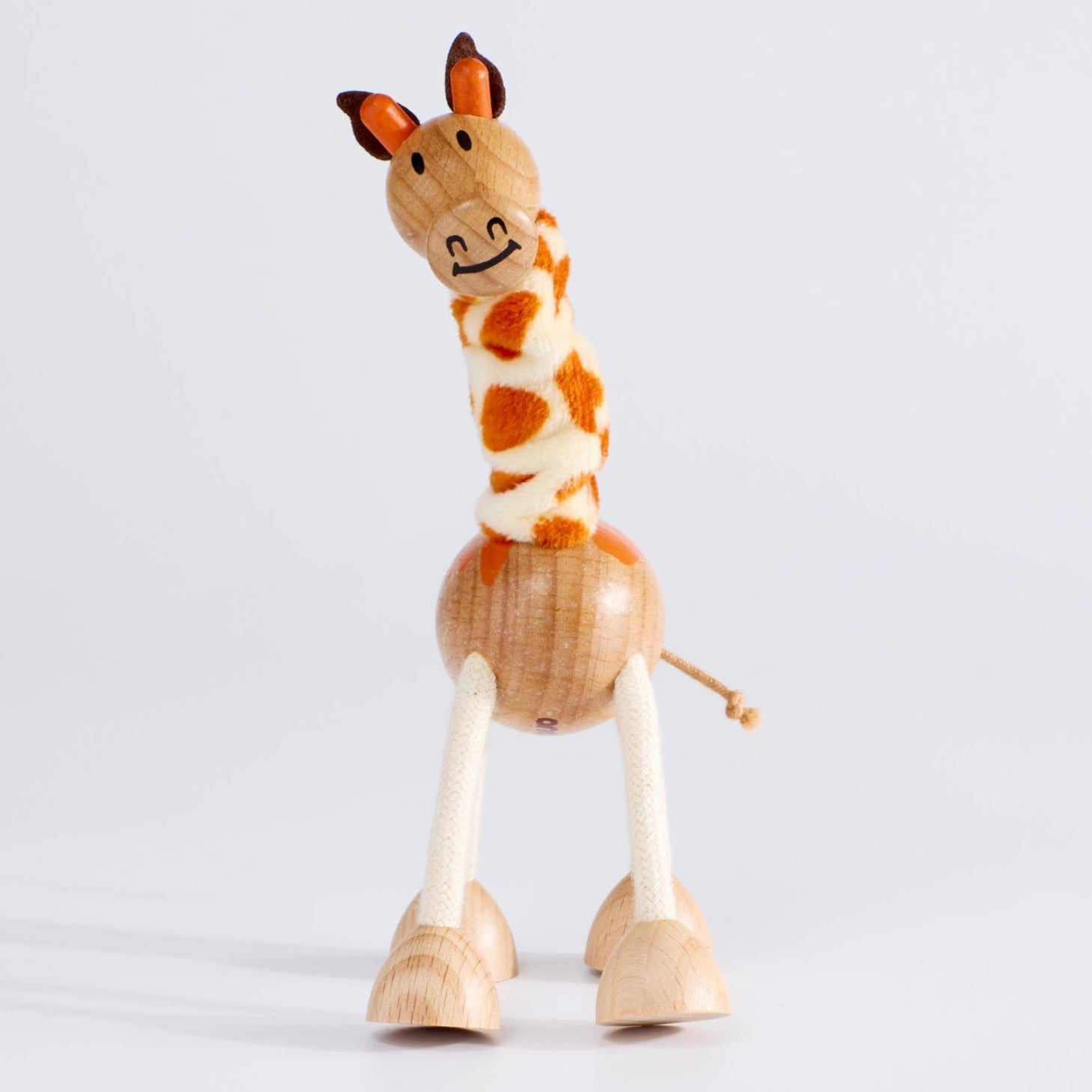
After learning all these incredible facts, there's no better way to spark imaginative play than with a beautifully crafted wooden giraffe figurine. Our Roaming Mountains collection features hand-painted, sustainably made animal figures — including our ever-popular giraffe — perfect for kids who love to learn through play.
Shop the Roaming Mountains Collection →
Learning Activities to Try at Home or in the Classroom
- Measure it out: Use a tape measure to show kids just how tall 5.5 metres is — mark it on a wall or in the backyard!
- Tongue challenge: Cut a 45cm strip of purple paper and let kids see how long a giraffe's tongue really is.
- Pattern art: Have kids create their own unique giraffe pattern using paint or markers — no two should look the same!
- Conservation conversation: Talk about what kids can do to help protect giraffes, like supporting wildlife charities or reducing waste.
Further Reading & Resources
Want to learn more about giraffes and how to protect them? These trusted organisations and educational sites are great places to start:
- Giraffe Conservation Foundation — the only organisation in the world dedicated exclusively to the conservation and management of giraffe in Africa. Includes educational resources and adoption programs.
- IUCN Red List — Giraffe — the definitive scientific assessment of giraffe conservation status, with detailed population data and threat analysis.
- San Diego Zoo — Giraffe — WWF's giraffe profile covers threats, conservation efforts, and ways families can help protect Africa's iconic tall animal.
- National Geographic — Giraffe — beautifully illustrated facts, photos, and videos about giraffes, ideal for curious kids and classroom research.
- DK Find Out — Giraffe — child-friendly, curriculum-aligned giraffe facts with interactive content, perfect for primary school learners.
Want more animal facts for kids? Explore our other articles on safari animals, farm animals, and ocean creatures — all designed to inspire curiosity and a love of the natural world.

Send us a note